Before the Program Starts, Something Else Has to
Most executives I’ve worked with approach transformation the same way.
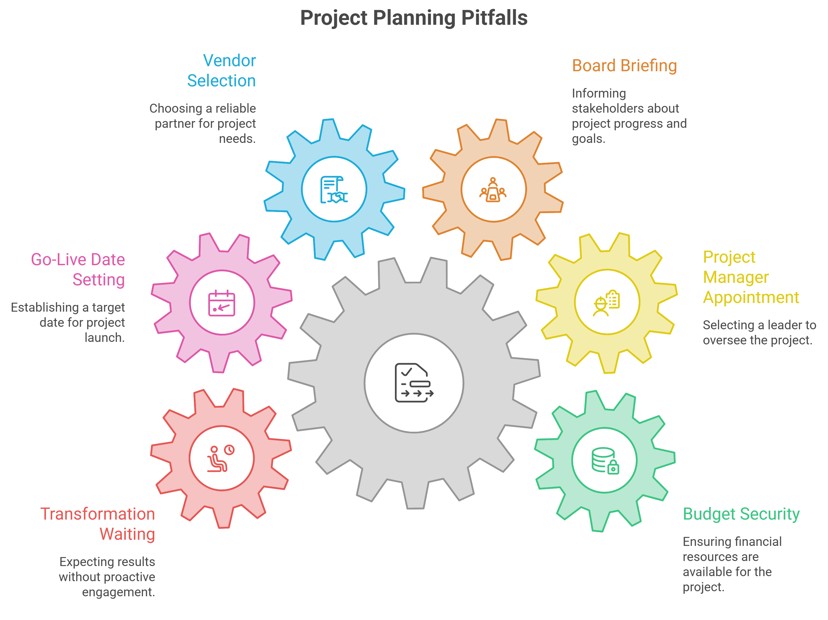
They secure the budget. They appoint a project manager. They brief the board. They select a vendor. They set a go-live date.
And then they wait for transformation to happen.
It doesn’t work that way. Not because the steps are wrong — they’re necessary. But because they come second. Something else has to come first, and it’s the part we rarely put on the project plan.
We tend to treat transformation as an external event.
A new system goes in. Processes get redesigned. People get trained. The organisation comes out the other side changed.
But what we’ve learned — sometimes the hard way — is that the system doesn’t change the organisation. The organisation has to change first, or at least begin to. The system just makes that change visible, or exposes the gap where it hasn’t happened yet.
The technical layer is the easy part. The hard part is what we believe about ourselves before the program is finished.
This is where belief does something specific.
Not belief as motivation. Not belief as a rally-the-troops speech at the project launch. Something quieter than that.
It’s the internal picture of what the organisation is becoming — held seriously, before the evidence exists to support it. Before the new system is live. Before the reports look different. Before staff have adjusted.
Leaders who carry that picture — and act from it — do something that no implementation methodology captures. They make decisions as if the transformation has already begun. Because for them, it has.
That shapes everything downstream. The tolerance for discomfort. The willingness to dismantle old workarounds. The refusal to let the new system simply mirror the old way of working.
And here’s what’s easy to miss.
Beliefs aren’t transmitted through instructions. They aren’t transferred in workshops, town halls, or visualisation exercises. People can sit through all of that and leave unchanged.
What does transmit belief is watching someone senior act from it. Consistently. Under pressure. When it would be easier to revert.
Staff and stakeholders are paying close attention — not to what leadership says the transformation is about, but to what leadership does when the transformation gets difficult. That’s where they take their reading. That’s where they decide whether this is real or not.
The precedent gets set early. Often before anyone realises it’s being set.
The reinforcing loop runs in both directions.
When leadership acts from the belief — with the discipline and rigour that a genuinely different organisation would require — it sends a signal. Not a message. A signal. Something people feel before they articulate it.
New patterns become visible. Standards shift. The organisation starts to behave differently because it’s being led differently.
And that behaviour reinforces the belief. For everyone.
The loop runs the other way too. When leadership hedges, reverts, or exempts itself from the standards it’s asking others to hold — the signal is equally clear. The program continues. But the transformation quietly stops.
So before the steering committee is formed and the project charter is signed, it’s worth sitting with one question:
What do we already believe about who we’re becoming — and are we willing to act from that, before the evidence arrives?
The program will surface the answer either way.
SP Singh is an independent ERP advisor and program oversight specialist. He works with executives sponsoring major technology programs across WA local government and Aboriginal corporations. Bhani Consulting — bhaniconsulting.com