Most organisations are built around two clear disciplines.
Business runs operations.
IT runs systems.
These are well understood.
They have structure, ownership, budgets, and accountability.
But there is a third responsibility that sits in every organisation—
quietly, persistently, and often poorly managed.
It is the responsibility to improve how the organisation works.
And in most organisations, no one truly owns it.
The Work That Everyone Does… But No One Owns
Think about the work required to make an organisation better:
- Redesigning processes
- Implementing ERP, CRM, or AI systems
- Improving data and reporting
- Standardising ways of working
- Driving adoption and behavioural change
- Removing inefficiencies and waste
This is not Business-as-Usual.
This is not IT infrastructure.
This is capability development.
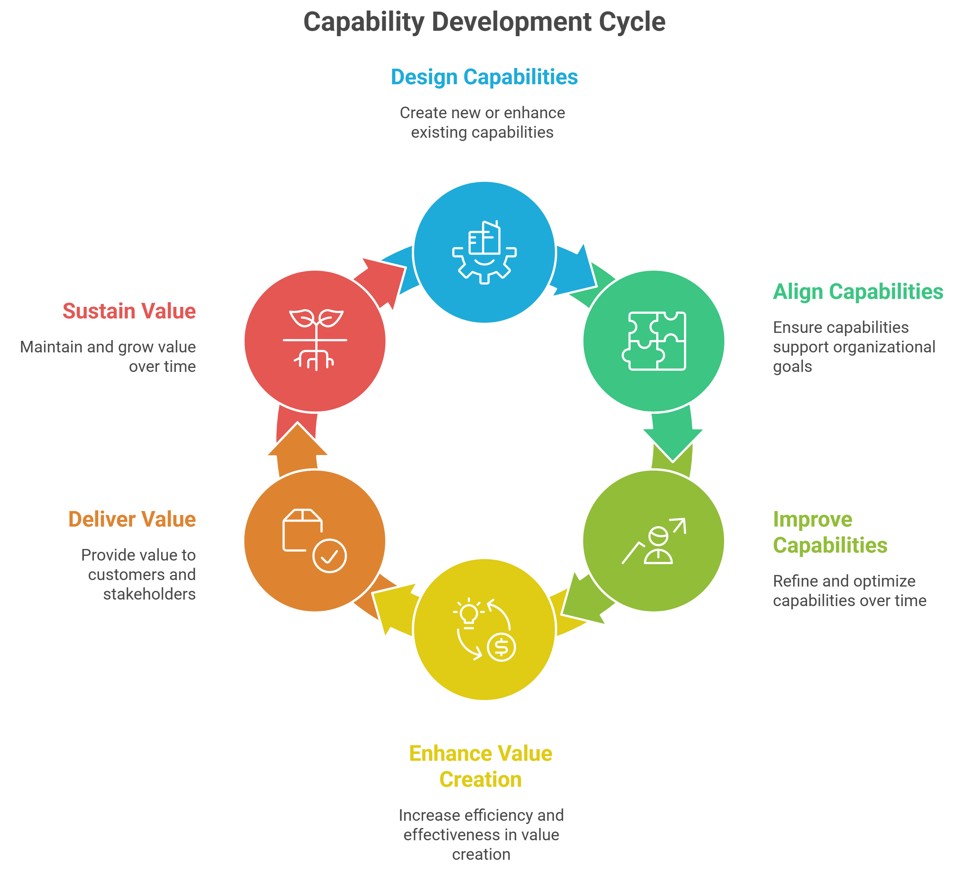
Capability development is the disciplined design, alignment, and continuous improvement of an organisation’s processes, systems, data, roles, and behaviours to enhance how value is created, delivered, and sustained over time.
It is the mechanism through which strategy becomes executable, systems become useful, and operations become more efficient and effective.
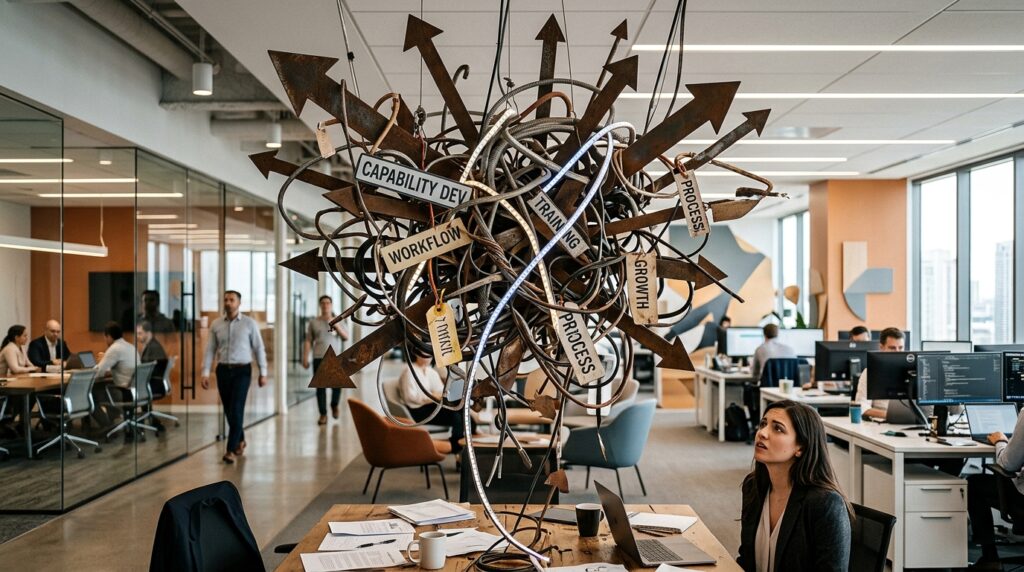
Yet, in most organisations, this work is fragmented:
- IT leads system implementation
- Business teams drive process changes
- PMOs coordinate delivery
- External consultants fill the gaps
Each does their part.
But no one owns the end-to-end capability system.
The Consequence of Fragmentation
When capability development is not treated as a discipline, predictable patterns emerge:
- ERP programs become “IT projects”
- Process redesign happens in isolation
- Change management is reactive
- Benefits are unclear or unrealised
- The same problems reappear in different forms
Organisations end up working hard to change, but not necessarily getting better.
This is not due to lack of effort.
It is due to lack of structure.
The Core Problem Is Not People—It Is Design
Most leaders assume:
“We need better execution.”
“We need better project management.”
“We need the right system.”
But these are symptoms.
The underlying issue is simpler:
The organisation has not defined how capability development actually works.
Without this:
- Decisions are inconsistent
- Ownership is unclear
- Standards vary
- Outcomes depend on individuals
And improvement becomes accidental rather than engineered.
Capability Development Is a Discipline
Capability development should sit alongside Business and IT as a formal discipline.
Not as:
- A project
- A temporary transformation program
- A loosely defined “initiative”
But as a structured, governed function responsible for:
- Designing how work should be performed
- Aligning systems, processes, and roles
- Governing implementation of change
- Ensuring adoption and value realisation
- Continuously improving organisational performance
A Simple Way to See It
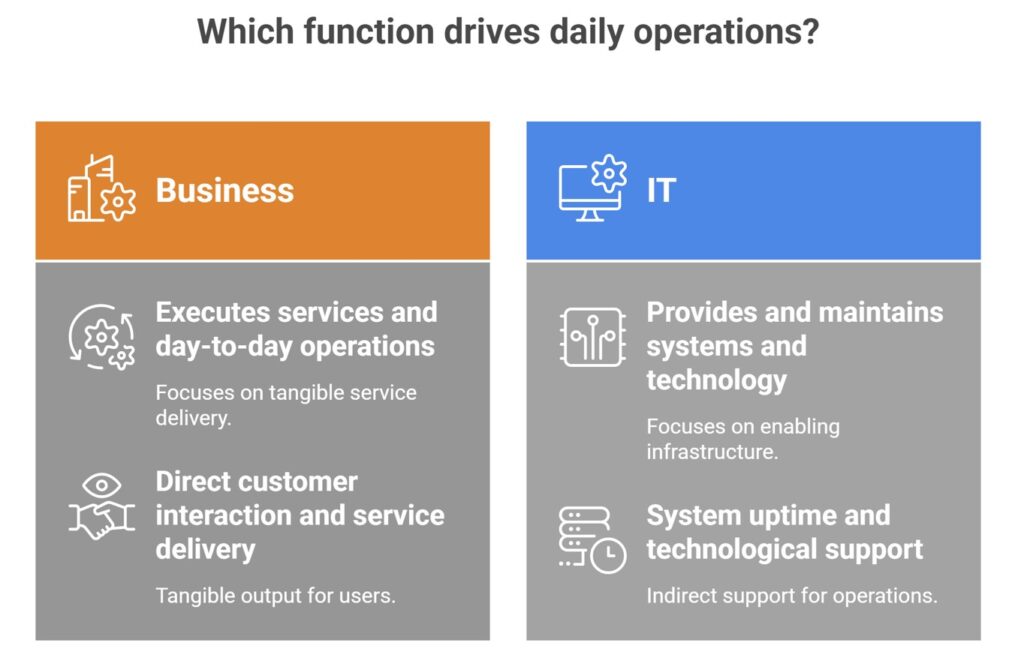
Every organisation operates across three disciplines:
Business
Executes services and day-to-day operations
IT
Provides and maintains systems and technology
Capability Development
Designs and improves how the organisation works
What Changes When This Is Defined
When capability development is treated as a discipline:
- ERP is no longer “owned by IT”—it is governed as part of capability design
- Process, system, and data decisions become integrated
- Change is structured, not reactive
- Benefits are tracked and realised
- Improvement becomes repeatable, not dependent on individuals
Most importantly:
The organisation develops the ability to get better—consistently.
The Reality
Every organisation is trying to improve.
Very few have designed how improvement actually happens.
Until this is addressed:
- Transformation will remain fragmented
- Systems will underperform
- And value will continue to leak quietly
Closing Thought
Organisations don’t fail because they don’t try to improve.
They struggle because:
Capability development exists everywhere…
but nowhere as a defined discipline.