The Digital Transformation Manifesto: Lessons from the Front Lines!:
When I work with organisations—especially local governments and service providers—one mistake appears again and again: people believe digital transformation starts with technology.
It doesn’t.
It starts with truth.
The truth about how your business really operates. The truth about the friction between your systems and your strategy. And the truth about what must change if you want your organisation to grow.
Technology only amplifies that truth. If your processes are weak, digital tools will break them faster. If your leadership is misaligned, new systems will expose that misalignment.
That’s why I often tell executives: Digital Transformation isn’t about technology—it’s about design.
Let me unpack the Digital Transformation Manifesto:
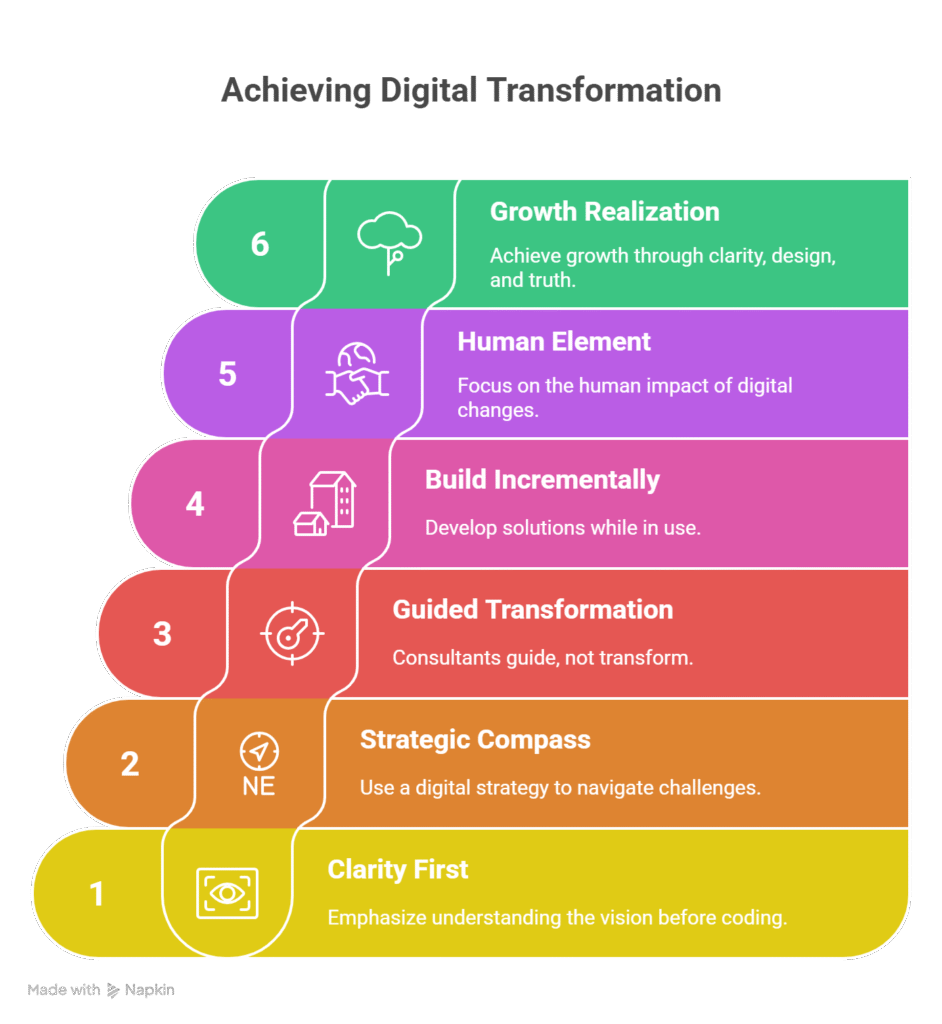
1. Transformation Begins with Clarity, Not Code
Across every business transformation project, I’ve seen leaders chase new systems the way kids chase shiny toys—ERP, CRM, AI, automation—each promising efficiency and innovation. But the challenge isn’t picking the wrong tool. It’s starting without a clear sense of why you’re transforming.
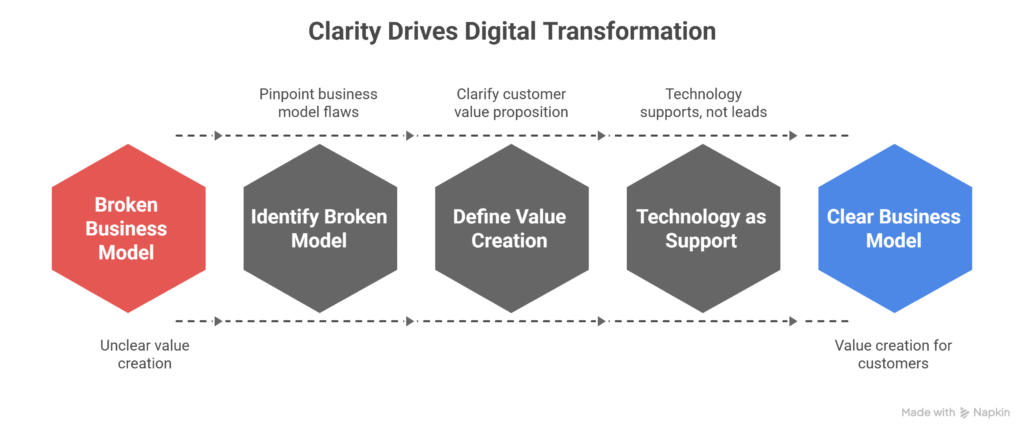
True digital transformation strategy begins with clarity. It means asking:
- What’s broken in our business model?
- What value do we want to create for customers?
- How can technology support—not lead—that journey?
When we begin engagements at Bhani Consulting, our first step is not software selection. It’s defining intent. Because once the purpose is clear, technology becomes an enabler—not a distraction.
Digital Transformation is not digitising chaos. It’s simplifying complexity.
And the businesses that master it aren’t the ones that adopt the most software—they’re the ones that understand themselves the best.
2. A Digital Strategy Is the Compass in the Storm
If digital transformation is the journey, digital strategy is the compass that keeps you from drifting.
Without a strategy, organisations adopt systems like puzzle pieces from different boxes—nothing fits. They invest heavily but still feel lost.
A clear digital strategy defines direction and priorities. It connects technology with business objectives and builds alignment between leadership, operations, and customers. It transforms random investment into intentional architecture.
I’ve seen local governments and service organisations regain control simply by stepping back to ask: What’s our digital north star?
With strategy, you build on purpose. Without it, you build by accident.
That’s why every digital transformation consultant should start with strategy before software. It prevents wasted investment and ensures every project—from ERP implementation to process automation—supports the organisation’s future state.
3. Consultants Don’t Transform You—They Guide You
Here’s another truth from the field: transformation can’t be outsourced.
You can hire the best technology consultant, but the real change happens only when your people take ownership.
The right digital transformation consultant acts as a navigator—someone who sees the big picture, challenges assumptions, and helps you make confident decisions.
- They are not loyal to vendors; they are loyal to your success.
- They don’t speak in jargon; they translate complexity into clarity.
- They don’t parachute in to take over; they empower your team to build capability.
Transformation fails when vendors lead the process, because their goal is to sell, not to align.
It also fails when IT managers are asked to drive transformation—they are trained to keep systems stable, not redesign them.
What you need is a strategic architect—someone who combines business understanding, systems thinking, and change leadership.
A Digital Transformation Consultant isn’t the hero of the story—they’re the architect of the foundation.
4. Build While You Live in the House
Digital transformation is like rebuilding your house while you’re still living in it.
You can’t pause operations or move everyone out. You must renovate carefully, one room at a time, while keeping the lights on.
That’s why transformation demands empathy, patience, and courage from leadership. Every decision must balance short-term disruption against long-term value.
Change doesn’t happen when conditions are perfect—it happens when leaders are disciplined enough to act despite imperfection.
Doing nothing is the real risk. Because when you delay transformation, you’re not standing still—you’re falling behind.
If you don’t modernise your foundation, you end up painting over cracks.
5. The Human Side of Digital Transformation
After years of consulting across industries, the biggest lesson I’ve learned is this: technology doesn’t change people—people change technology.
The most successful digital transformation projects are built on trust, communication, and shared purpose. When leaders communicate clearly and empower teams, digital tools become extensions of human capability—not replacements for it.
Transformation is ultimately a human story. It’s about courage to confront outdated processes, discipline to implement change, and humility to keep learning.
The future of technology leadership will belong to those who combine technical skill with emotional intelligence—leaders who understand that data and empathy must work together.
6. The Closing Truth
The organisations that thrive aren’t those with the most advanced systems; they’re the ones that use technology intentionally.
Transformation doesn’t begin with software—it begins with self-awareness.
- Truth leads to clarity.
- Clarity leads to design.
- Design leads to growth.
Every business has two choices:
Evolve by design or decay by default.
That’s the foundation of every successful digital transformation strategy.
And that’s what I’ve learned from the front lines.