Two years ago, the CEO approved a major ERP program.
It made sense.
The organisation had outgrown its systems.
Processes were fragmented.
Reporting was inconsistent.
Everyone agreed — something had to change.
A strong business case was presented.
A reputable vendor was selected.
A capable implementation partner was engaged.
Governance structures were established.
Steering committees were formed.
Monthly reports were circulated.
From the outside, everything looked right.
Inside the organisation, something else was happening.
The CEO had other priorities — budget pressures, community expectations, political sensitivities.
ERP remained important, but not urgent.
So responsibility shifted.
Directors stepped in.
They were capable, committed, and accountable for their areas.
But ERP was not their only concern.
They were balancing:
- operational demands
- staff issues
- compliance pressures
- competing initiatives
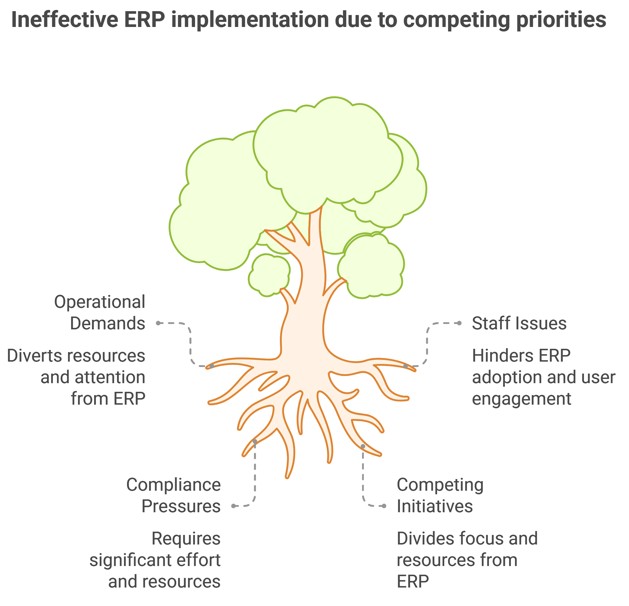
They were making decisions in a domain they did not fully control.
The system design began to take shape.
Workshops were held.
Requirements were gathered.
Vendors provided guidance.
Small decisions were made daily.
Each one reasonable.
Each one justified.
- “We need to adjust this to fit our process.”
- “The vendor recommends this approach.”
- “We can fix that later.”
No single decision was wrong.
But collectively, something was drifting.
Months passed.
Progress reports remained positive.
- “On track”
- “Within scope”
- “Risks managed”
There was no obvious failure.
Only a gradual shift away from the original intent.
Then came go-live.
The system worked.
But not as expected.
Processes felt heavier.
Workarounds began to appear.
Spreadsheets quietly returned.
Users adapted — but not optimally.
The organisation stabilised.
From the outside, it was called a success.
From the inside, it felt different.
Value was lower than expected.
Effort was higher than planned.
Confidence was uncertain.
Eighteen months later, the real questions began.
Why are we still struggling with reporting?
Why are processes more complex?
Why are we not seeing the benefits we expected?
The CEO now had to answer.
To Council.
To the Board.
To the organisation.
By this time:
- the project team had moved on
- the vendor had delivered their scope
- key decision-makers had shifted roles
What remained was the system.
And the outcome.
No single decision caused the problem.
No individual failed.
Yet the result was not what was intended.
The organisation did not fail.
It simply absorbed the outcome.
Adjusted.
And moved forward.
And in many cases — prepared to do it again.
The Real Question
Why does this keep happening?
Not in one organisation.
But across many.
The Insight
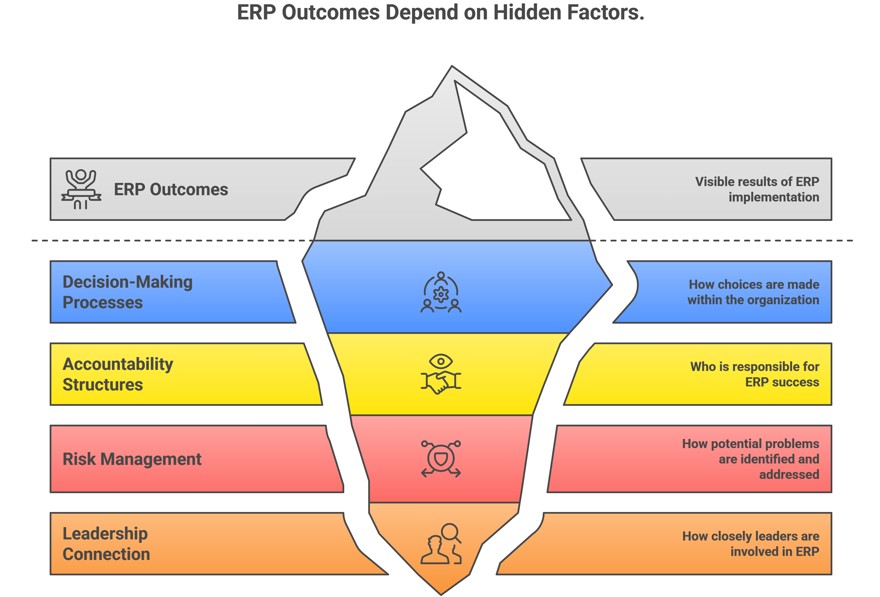
ERP outcomes are rarely determined by effort, capability, or intent.
They are shaped by something far less visible:
- how decisions are made
- who holds accountability
- how risk is surfaced
- how closely leadership stays connected
In most organisations, these elements are not actively controlled.
They are left to emerge.
The Truth
When there is no clear control over decisions, governance, and signals: ERP outcomes are driven by drift, not design.
And drift feels like: Luck
The Bridge
This is why most organisations do not have a system problem.
They have a control problem.
Introducing the Shift
The organisations that succeed do one thing differently.
They do not leave ERP to:
- project teams
- vendors
- or fragmented governance
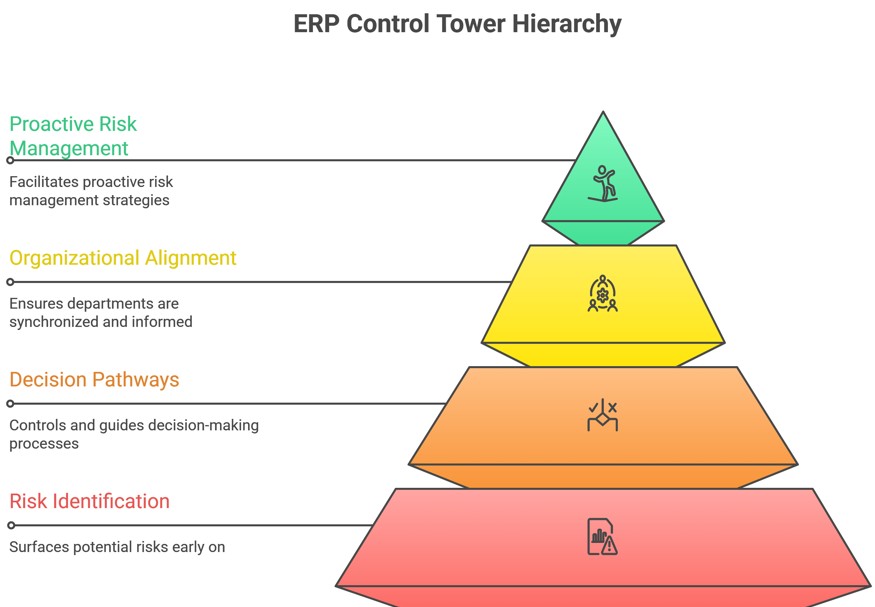
They create a mechanism that:
- maintains executive visibility
- surfaces risk early
- controls decision pathways
- aligns the organisation continuously
What do we do to help organisations guarantee successful ERP implementations?
We set-up: ERP Control Tower™
Most organisations implement ERP.
Very few actually control it.